


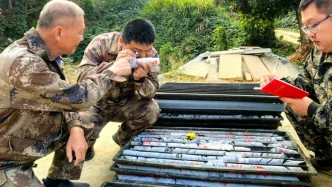
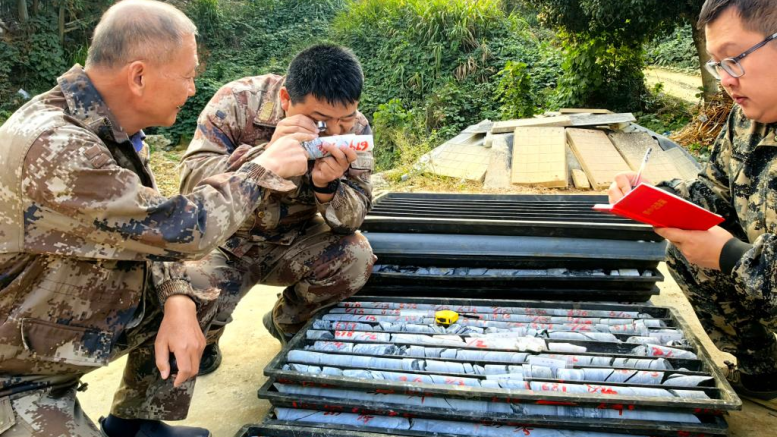
China’s recent claim of discovering a gold deposit worth $83 billion in Hunan Province has been met with skepticism, particularly from the World Gold Council (WGC). The Geological Bureau of Hunan Province announced on November 21 that over 1,000 tonnes of gold (35.2 million ounces) had been found at the Wangu gold field in Pingjiang County, with 300 tonnes (10.5 million ounces) reportedly identified within 2,000 meters of the surface. The remainder of the deposit, extrapolated from deeper drilling, is said to lie at depths of up to 3,000 meters. While the announcement generated substantial media buzz, experts are urging caution over the ambitious scale of the find.
John Reade, senior market strategist at the WGC, described the 1,000-tonne estimate as “aspirational,” suggesting that the 300-tonne figure could represent an inferred or indicated resource rather than a proven reserve. He pointed out that much more exploration and independent verification would be needed to substantiate these claims, especially since Chinese mineral reporting standards do not align with internationally recognized frameworks such as Canada’s NI 43-101 or Australia’s JORC code. Without third-party assessments, such announcements remain speculative, he said.
The challenges of developing a deposit at such depths compound the doubts. While the Chinese Geological Bureau reported high-grade intercepts of up to 138 grams of gold per tonne, deposits at depths of 2,000 to 3,000 meters are rare and costly to develop. South Africa’s Mponeng mine, one of the world’s deepest at over 4,000 meters, demonstrates that such operations are technically feasible but often economically prohibitive without consistently high grades. Reade further noted that even if the Wangu field were proven viable, bringing it into production could take years and would likely contribute only marginally to the global gold supply, which stands at roughly 127 million ounces annually. 
The skepticism surrounding the Wangu discovery echoes past incidents, such as the widely publicized 2020 claim of a 3,000-tonne gold deposit in India’s Sonbhadra district, which was later debunked. The Geological Survey of India ultimately confirmed reserves of just 160 kilograms, highlighting the risks of premature announcements.
China, the world’s largest gold producer, is facing declining output as environmental regulations and safety measures force the closure of small-scale operations. Discoveries like Wangu are seen as potential lifelines for extending reserves in a country where mine lives tend to be short. However, the deposit’s feasibility remains uncertain, and experts are calling for a more rigorous assessment to determine its true potential.
Adding to the complexity is the broader context of China’s gold market. Earlier this year, the People’s Bank of China paused its record-breaking spree of gold purchases, creating additional uncertainty about the country’s strategic direction in the sector. While the Wangu discovery has captured attention, its long-term impact on China’s gold market—and its role in global supply chains—remains far from clear.


