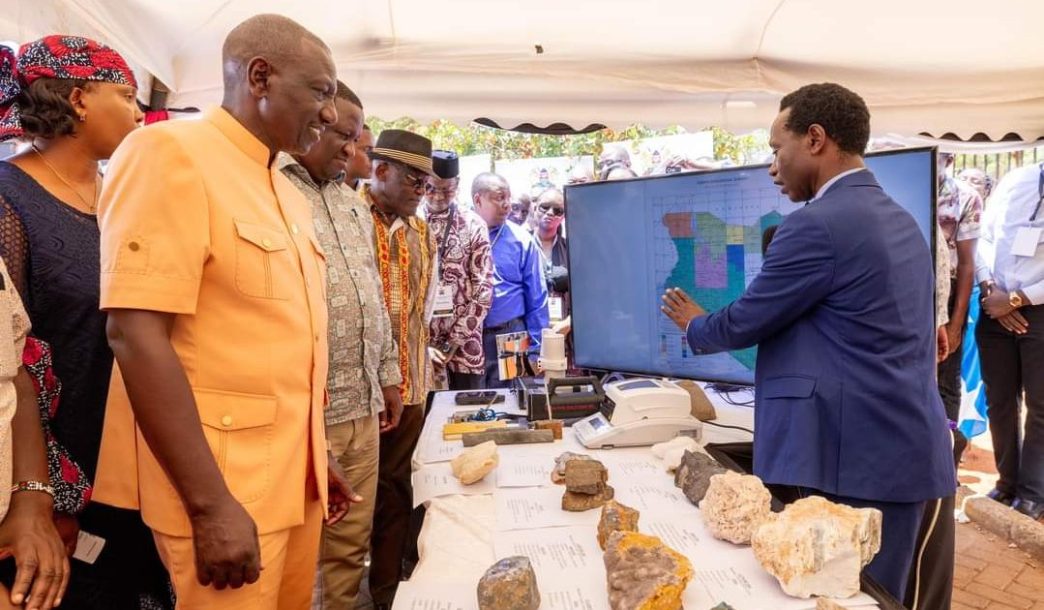
The Ministry of Mining, Blue Economy, and Maritime Affairs met with gemstone miners and traders in Taita Taveta County to address persistent challenges in the sector, including underutilization of the Voi Gemstone Centre, licensing delays, and a lack of technical support for artisanal miners.
Elijah Mwangi, Principal Secretary for the State Department for Mining, acknowledged that the Voi Gemstone Centre, launched in 2023 to boost local value addition and cut reliance on raw exports, has fallen short of expectations. He blamed leadership issues and operational inefficiencies for the underperformance, saying these hurdles need to be addressed to unlock the centre’s full potential.
Mwangi directed the centre to hold elections within 30 days to establish new leadership representing miners, dealers, and other stakeholders, while also ordering an assessment of rent rates to make the facility more accessible. “We need leadership that comes from within the industry, not imposed from outside,” he said. 
Government officials said a recent survey of the gemstone value chain revealed significant opportunities for growth, particularly in cutting and polishing gemstones locally before export. The ministry has also deployed geologists, engineers, and inspectors to help artisanal miners improve extraction methods and ensure compliance with safety standards.
Mwangi said the government is formalizing small-scale mining operations by forming cooperatives and granting legal access to mining sites, including sections of national parks. He noted that 12 artisanal cooperatives have already been registered in the county, aiming to improve miners’ access to resources and reduce illegal operations.
Director of Mining Gregory Kituku said the government is focused on preventing exploitation by brokers and encouraging local value addition to maximize returns from gemstone sales. He called for stricter regulation and performance-based licensing to ensure miners comply with royalty payments and traceability requirements.
Kituku said export permits for legally mined gemstones, including Tsavorite, have not been denied, but he emphasized that Kenya’s future in the global gemstone market depends on strengthening local processing capacity. “We need to market Tsavorite as a unique Kenyan brand and ensure that our resources benefit our people,” he said.
Taita Taveta Deputy Governor Christine Kilalo and Voi Member of Parliament Abdi Chome both stressed the need for continuous government support to ensure the county’s mineral wealth benefits all residents, not just those directly involved in mining.
Kilalo welcomed the government’s focus on stakeholder engagement but urged more efforts to streamline licensing and address delays that have hindered the sector’s growth. Chome said the local community should see more direct benefits from mining activities through royalties and economic programs tied to the region’s natural resources.
Stakeholders at the meeting raised concerns about market access, delays in processing licenses, and the shortage of skilled gem cutters. They called for faster licensing processes and more government support to improve the sector’s competitiveness.
Kituku reiterated that compliance with regulations is essential to building a sustainable and transparent gemstone industry. “Our goal is to make Kenya a leader in the gemstone sector by strengthening local capacity, improving regulation, and creating a fair market that benefits everyone involved,” he said.