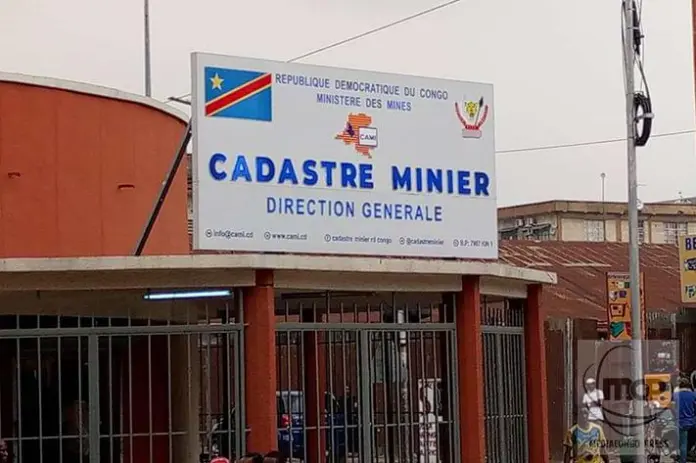
In a communiqué dated January 10, 2025, the Cadastre Minier (CAMI), the Mining Cadastre of the Democratic Republic of Congo (DRC), issued a reminder to mining rights holders listed in an annex available on its website, www.cami.cd. The reminder pertains to the legal requirement under Article 71, section (d) of the DRC Mining Code, which obligates mining companies to transfer 10% of their share capital to the Congolese State. According to CAMI, the required documentation proving the transfer of these shares has not been recorded in its official registry.
CAMI has given the mining rights holders concerned a period of 45 days to submit proof of the share transfer. This evidence must be delivered to the Mining Cadastre office in Kinshasa within the specified timeframe. Failure to comply with this directive could result in legal and administrative consequences under Congolese mining regulations.
Role of CAMI in the Mining Sector of the DRC
The Cadastre Minier (CAMI) plays a central role in regulating and administering mining activities in the Democratic Republic of Congo. Established as part of the country’s efforts to modernize its mining sector, CAMI is tasked with managing mining rights, overseeing compliance with the Mining Code, and maintaining transparency in the allocation of mining titles. Its primary responsibilities include: 
- Granting and Monitoring Mining Titles: CAMI processes applications for exploration and exploitation permits, ensuring that licenses are issued in accordance with legal and regulatory requirements.
- Maintaining a Public Registry: It keeps an updated and accessible registry of all mining titles, providing critical information on ownership, transfers, and lease conditions.
- Enforcing Legal Obligations: CAMI ensures that mining companies comply with the obligations outlined in the Mining Code, such as social and environmental commitments, and the requirement to cede a 10% equity stake to the Congolese State.
- Facilitating Investments: CAMI provides administrative support to both domestic and international investors, helping them navigate the legal and procedural aspects of operating in the DRC’s mining sector.
- Resolving Disputes: The agency works to mediate conflicts related to mining titles or territorial overlaps, ensuring the fair application of the Mining Code.
CAMI’s role is particularly significant in a country like the DRC, which holds some of the world’s largest reserves of key minerals such as cobalt, copper, and gold. By enforcing the rules laid out in the Mining Code, CAMI aims to balance the interests of the Congolese government, local communities, and private investors, ensuring that the country’s rich mineral resources contribute to national development while fostering a transparent and sustainable mining industry.