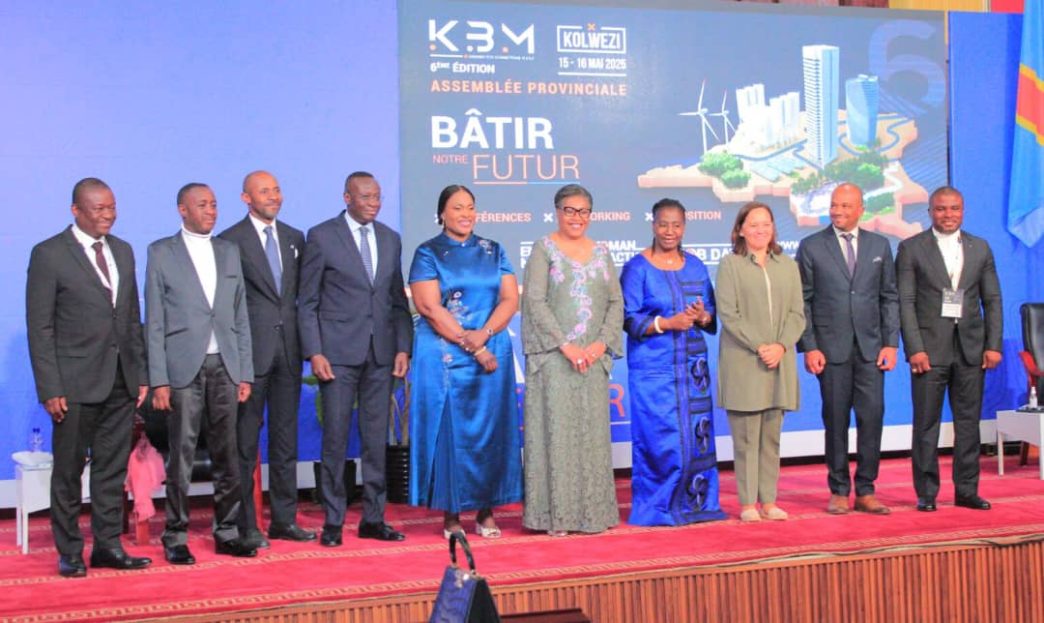
Prime Minister Judith Suminwa Tuluka opened the sixth Katanga Business Meeting on Thursday, sketching a three-part economic agenda that hinges on reliable power, local content rules and the Lobito Corridor railway linking this copper-rich region to the Atlantic.
Speaking alongside Lualaba governor Fifi Masuka and foreign diplomats, Ms. Suminwa said the government will streamline licensing and subcontracting to draw industrial capital, but warned that factories will stall without “competitive, clean electricity.” State utility SNEL supplies less than two-thirds of peak demand to Katanga’s mines, forcing producers such as Glencore to run diesel units that add roughly $0.07 a pound to copper costs, according to industry estimates.
The premier highlighted the Lobito rail concession, jointly backed by Trafigura, Mota-Engil and Vecturis, as a pillar of the plan. 
When operational, the 1,300-kilometer line is expected to cut transit times to port to ten days from the current six weeks via Dar es Salaam, giving cobalt and lithium producers an alternative to congested east-bound routes (U.S. Chamber of Commerce analysis, October 2023). U.S. Chamber of Commerce
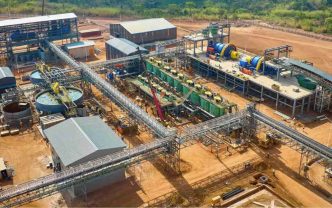
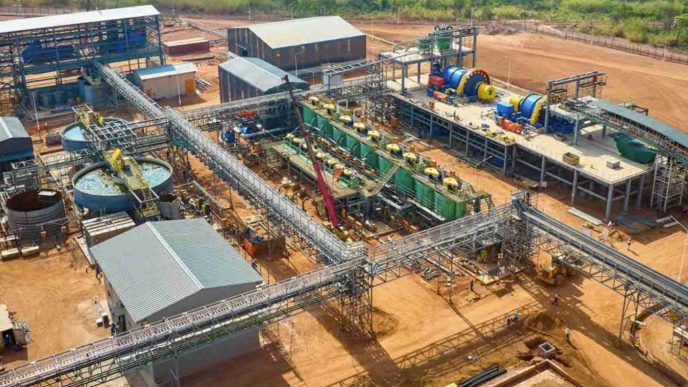
Officials view the corridor as leverage to spur onshore processing of critical minerals. Hua Ye Mining and Sequoia Mining last month pledged a combined $1.1 billion for a special-economic zone and coal assets that would supply new furnaces, the Finance Ministry said.
The European Union and the U.S. have separately offered concessional loans to extend track into Zambia and central Congo, part of a broader contest with China for battery-metal supply chains (The Times, Jan. 2025).
Launched in 2014, the Katanga Business Meeting has grown into Congo’s main public-private dialogue, attracting 120 exhibitors and roughly 2,000 visitors this year, according to the event’s organizers.