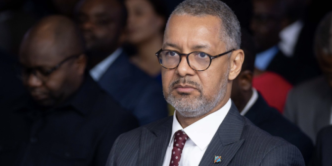
The United States Agency for International Development (USAID) has committed $2 million to a project aimed at professionalizing the artisanal copper-cobalt supply chain in the Democratic Republic of Congo (DRC). Announced on January 14, the initiative is led by Entreprise Générale de Cobalt (EGC), a subsidiary of the state-owned mining company Gécamines, under the leadership of CEO Éric Kalala.
According to USAID, the funding will bolster EGC’s capacity to oversee artisanal mining operations responsibly. This includes strengthening field operations and enforcing international standards such as the Voluntary Principles on Security and Human Rights.
The ultimate goal is to ensure that Congolese artisanal cobalt adheres to global expectations for ethical sourcing, a pressing issue for an industry often criticized for poor labor practices and environmental concerns. 
The project’s pilot phase involves five artisanal mining sites, with cooperatives set to manage operations under strict specifications designed to promote responsible mining. EGC plans to purchase all production from these sites and sell it internationally, with full traceability to satisfy market demands.
Feasibility studies will precede the selection of cooperatives, ensuring compliance with ethical and operational benchmarks. If successful, this model could expand to artisanal mining operations across the country.
Kalala has been active in securing support for this initiative, meeting with international stakeholders, including the European Commission, to drum up additional funding. He also facilitated a partnership with Cobalt for Development (C4D), a project spearheaded by the German development agency GIZ, aimed at improving sustainability in the cobalt supply chain.
Despite these efforts, the broader landscape presents challenges. The U.S. Department of Labor recently included Congolese cobalt on its list of goods associated with child labor. While this classification specifically targets artisanal mining, which accounts for approximately 20% of the DRC’s cobalt output, it adds pressure to an already scrutinized sector.
Congolese officials and industry leaders have criticized the decision, arguing that it paints the entire industry in an unfavorable light and undermines decades of U.S. support for mining in the region.
The project’s success will depend on addressing systemic issues that have long plagued artisanal mining in the DRC, including unsafe working conditions, limited regulatory oversight, and governance challenges. While USAID’s funding and EGC’s leadership are significant steps forward, questions remain about whether the financial commitment is sufficient to create meaningful, lasting change. Critics point to the DRC’s structural obstacles, such as inadequate infrastructure and inconsistent enforcement of mining laws, which could hinder the project’s progress.
The DRC remains the world’s largest source of cobalt, a critical mineral used in electric vehicle batteries and other high-tech applications. As global demand for cobalt continues to rise, pressure mounts on mining companies and governments to ensure that supply chains are both ethical and sustainable. EGC’s initiative represents an ambitious attempt to address these concerns, but its long-term success will require sustained collaboration among international donors, local communities, and Congolese authorities.
By focusing on professionalizing artisanal mining and introducing transparent systems, the project aims to strike a balance between economic development and ethical responsibility. Whether this balance can be achieved in a sector marked by entrenched challenges will ultimately determine the initiative’s legacy and its impact on the global cobalt market. For now, the investment signals a cautious yet significant step toward transforming one of the world’s most scrutinized industries.