Ghana’s mining sector has mounted resistance against the government’s decision to triple the Growth and Sustainability Levy, calling into question Accra’s economic justification for the tax hike amid complex realities in the minerals market.
The Ghana Chamber of Mines disputed the government’s rationale for raising the GSL from 1% to 3% in the 2025 Budget, challenging the narrative that Ghana has failed to capture adequate economic value from its natural resources. The government’s decision comes as global gold prices have reached historic highs, but the Chamber argues this perspective mischaracterizes the industry’s actual fiscal contribution.
“These statistics encompass the entire extractive sector,” the Chamber stated, responding to claims that extractive sector rents represent 14% of gross domestic product while extractive sector revenue accounts for approximately 1.5% of GDP. 
Drawing on World Bank data, the Chamber emphasized that mineral rents specifically have remained below 3% of GDP for most of the period between 1990 and 2021, with values ranging from 2.4% in 2015 to 5.2% in 2021. The distinction between mineral rent and revenue forms a core element of the Chamber’s counterargument.
“Mineral rent is a residual value, the excess revenue from mineral extraction after covering all costs, including investor returns,” the Chamber explained, noting that member companies’ mineral revenue contributed approximately 8% to Ghana’s GDP in 2024.
The Chamber further contends that mineral rents are already distributed among various stakeholders rather than monopolized by investors. Citing the Natural Resource Governance Institute, the Chamber indicated that Ghana’s government currently captures around 50% of mineral rent, with some analyses suggesting the figure could exceed 60%.
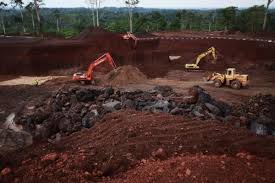
The increased levy creates particular concerns for producers of minerals like manganese and bauxite, which haven’t experienced the price appreciation seen in gold markets. This asymmetry highlights the blunt nature of the tax increase, potentially undermining operations across different mineral segments regardless of profitability profiles.
The dispute reflects deeper tensions in Ghana’s approach to resource governance. The Chamber referenced the troubled history of state intervention in the mining sector, noting that during the 1960s and 1970s, government nationalization efforts under the State Gold Mining Corporation led to a 60% decline in national mineral production and a 45% drop in mining employment between 1970 and 1982—factors that contributed to Ghana’s economic crisis in the 1980s.
Despite objections to the levy increase, the Chamber signaled willingness to engage with the Ministries of Lands and Natural Resources and Finance to mitigate impacts on financially vulnerable operations while supporting government revenue objectives.
The Chamber’s economic impact data indicates that between 2020 and 2023, member companies spent an average of $2.87 billion annually on locally sourced goods and services, while contributing $1.19 billion in taxes and $32 million in corporate social investments. According to the Chamber, approximately 75% of mineral revenues during this period were repatriated through local financial institutions, challenging assertions that investors retain disproportionate profits offshore.
In a forward-looking proposal, the Chamber has advocated for a legislative framework comparable to the Petroleum Revenue Management Act specifically for the mining sector, which would formalize transparency mechanisms and potentially reshape the narrative around mining’s contribution to national development.