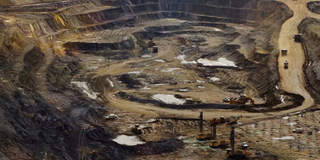
In a year marked by heightened global focus on critical minerals, mining companies invested a record $130.7 million in exploration projects in the Democratic Republic of Congo (DRC) in 2024. According to a detailed report released by S&P Global Market Intelligence on February 21, 2025, this figure not only reinforces the DRC’s leadership in Africa’s mining exploration landscape but also carries significant geopolitical and economic implications for the continent and beyond.
The report reveals that out of a total of $1.3 billion invested across Africa last year, a substantial portion of capital flowed into the DRC. Investors directed nearly $71.5 million specifically toward copper exploration, highlighting the country’s rich copper reserves. This investment has positioned the DRC as the continent’s premier destination for copper exploration, narrowly surpassing Zambia, which attracted $65.5 million in a similar period. The emphasis on copper is particularly important as the metal plays a central role in electrification and renewable energy infrastructure, sectors that are critical to the global energy transition.
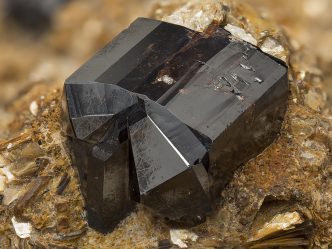
In addition to copper, the DRC attracted considerable interest in cobalt exploration, with $8.3 million allocated to this sector. Given that the DRC is estimated to hold roughly 50 percent of the world’s cobalt reserves and contributes over 70 percent of global production, these investments are crucial for supporting the supply chains that undergird the manufacturing of batteries for electric vehicles. While exploration spending on other resources such as gold, coltan, tin, and zinc was not detailed in the report, the DRC’s extensive mineral endowment makes it a focal point for future investment. 
The robust inflow of capital into the DRC’s exploration activities is driven primarily by its vast natural resource wealth. In 2023, the country accounted for 65 percent of newly announced copper reserves globally, a statistic that underscores its pivotal role in future supply prospects. For investors, the DRC represents not only an opportunity to tap into significant untapped resources but also a chance to capitalize on the growing global demand for metals that are essential to modern technology and sustainable development.
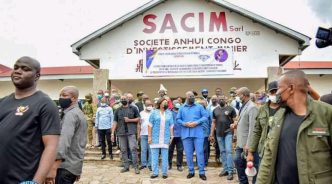
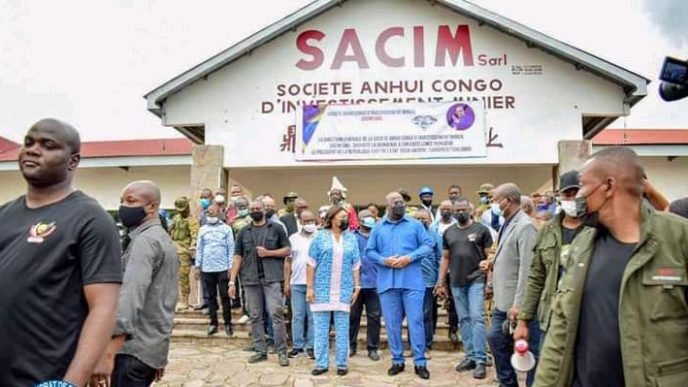
However, the landscape is not without its challenges. Chinese companies continue to dominate the DRC’s mining sectors, controlling an estimated 80 percent of the country’s copper and cobalt operations. This has raised concerns among local stakeholders and international investors about the concentration of economic power and potential implications for national sovereignty. In response, the government in Kinshasa has been actively seeking to diversify its investor base, exploring partnerships with countries such as Saudi Arabia and the United States. Such efforts aim to balance external influence and ensure that the revenues generated from these resources contribute to the country’s long-term development.
Beyond the immediate figures, the investments in the DRC reflect a broader global trend where financial flows are increasingly channeled into strategic resource extraction. As nations worldwide push for rapid decarbonization, the demand for battery metals like copper and cobalt is expected to surge. This transition is not only reshaping global supply chains but also redefining the geopolitical landscape of resource-rich regions. For European and American companies, establishing reliable access to these minerals will be critical, particularly as the world grapples with shortages and supply disruptions.