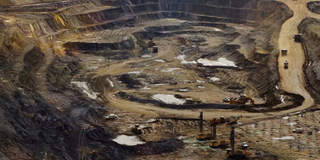
The Democratic Republic of Congo, the world’s preeminent cobalt producer, is poised to suspend its cobalt exports for a four‐month period, a move that signals a dramatic shift in the country’s resource management policy. The decision, reported by The East African, comes amid a confluence of domestic pressures and global market fluctuations that have forced the government to rethink its approach to one of its most critical mineral exports.
In recent years, the DRC has grappled with the challenge of balancing domestic needs with the demands of a global market hungry for cobalt—a metal indispensable to electric vehicle batteries and renewable energy technologies. As domestic consumption rises and the price of cobalt continues to oscillate, the government has determined that maintaining unfettered exports does not serve the nation’s long-term economic interests. By temporarily halting exports, Congolese authorities aim to secure better returns for their resource wealth and stimulate improvements in domestic processing and value addition.
This policy adjustment must be viewed in the context of an industry under intense global scrutiny. As countries across Europe, North America, and Asia race to secure supplies of cobalt for their burgeoning green economies, the DRC’s decision to curb exports injects an element of uncertainty into international supply chains. Downstream industries, particularly those linked to the production of electric vehicles and solar panels, now face the prospect of tighter supply, a situation that could reverberate through global markets already reeling from post-pandemic disruptions. 
The export suspension is not merely a reaction to short-term market dynamics; it represents a broader strategic realignment. For decades, the DRC has struggled with how to extract maximum value from its vast mineral resources, often to the detriment of national development. Historically, much of the revenue generated from cobalt has flowed to foreign buyers and multinational corporations, while local communities and state coffers have received only a fraction. The new measure is part of an ongoing effort to assert greater state control over mineral exports, ensuring that the proceeds of resource extraction contribute more directly to the country’s economic development.
Critics, however, caution that the suspension might not yield the desired benefits if it is not accompanied by broader structural reforms. The DRC’s mining sector has long been plagued by corruption, inadequate infrastructure, and inconsistent enforcement of mining laws. These systemic issues, if left unaddressed, could undermine efforts to rebalance revenue flows, even as the government tightens its grip on exports. The challenge for policymakers will be to implement this measure in a way that not only increases state revenue but also improves the overall governance of the mining sector—a tall order in a country where institutional weaknesses have long impeded progress.
The global implications of the export suspension are equally significant. International buyers, now more dependent on a stable supply of cobalt, may be forced to seek alternative sources or renegotiate prices in response to the temporary shortage. This could lead to a reordering of supply chains in the electric vehicle and renewable energy sectors, industries that are already undergoing rapid transformation in response to the pressures of a changing energy landscape. In a market characterized by high volatility, the DRC’s move may well prompt multinational companies to diversify their sourcing strategies, thereby altering the competitive dynamics of the global cobalt trade.