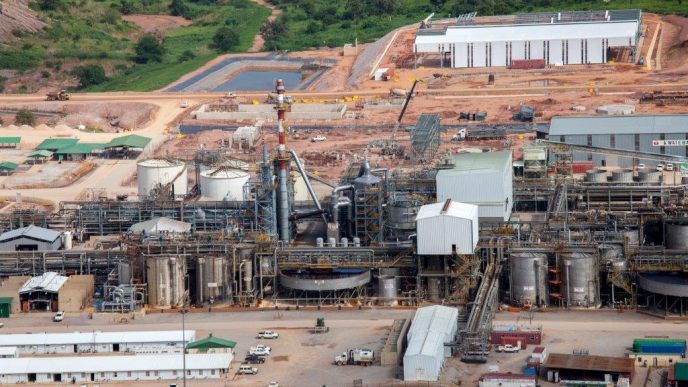
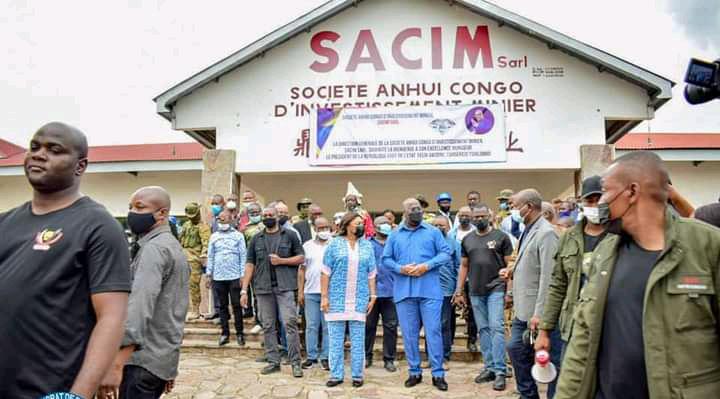
The Société Anhui-Congo pour l’Investissement Minier (SACIM) operates in the Kasaï-Oriental province of the Democratic Republic of Congo at a time when the nation’s mining sector is under intense scrutiny. Jointly owned by the Congolese state and a Chinese construction firm, SACIM has been struggling to meet its financial and social obligations. Local sources report that the company is failing to pay salaries, provide necessary food and medical support to its workforce, and renew essential production equipment—a combination of factors that jeopardizes its operational competitiveness and the broader developmental benefits the mining sector is supposed to generate.
At the heart of the controversy lies the management of diamond exports. An administrative decree issued in February 2022 handed the Centre d’expertise, d’évaluation et de certification des substances minérales précieuses et semi-précieuses (CEEC) a monopoly on international diamond sales from Congolese mines. This regulatory framework, widely criticized for its incompatibility with the country’s revised mining law, has coincided with a steep decline in diamond export revenues. While exports generated approximately $229.3 million in 2016, the figure dropped to $113 million in 2020 and further contracted to $86 million in 2023. Although there has been a slight recovery in early 2024, the trend raises serious questions about the effectiveness of the current system, as well as its long-term viability.
Complicating matters further is the role of SACIM’s Chinese partner. Their entry into the company was conditioned on promises to finance a series of infrastructure projects in energy, agriculture, and public health. Yet, these commitments have largely gone unfulfilled, prompting the Congolese government to consider measures that would strengthen its oversight of the mining sector. The goal is to ensure that the revenues derived from the country’s abundant mineral wealth are redirected to support national development rather than simply enriching foreign investors and intermediaries. 
This situation is emblematic of a recurring challenge in resource-rich nations. The DRC, despite its vast deposits, has long struggled with governance issues and a regulatory framework that fails to capture the full economic value of its natural resources. The case of SACIM illustrates how administrative measures, when poorly implemented, can lead to significant revenue losses and stifle investment in critical infrastructure.